 Fewer Cases Better Results






Why Comparative Negligence Affects Your Car Accident Claim In Oregon
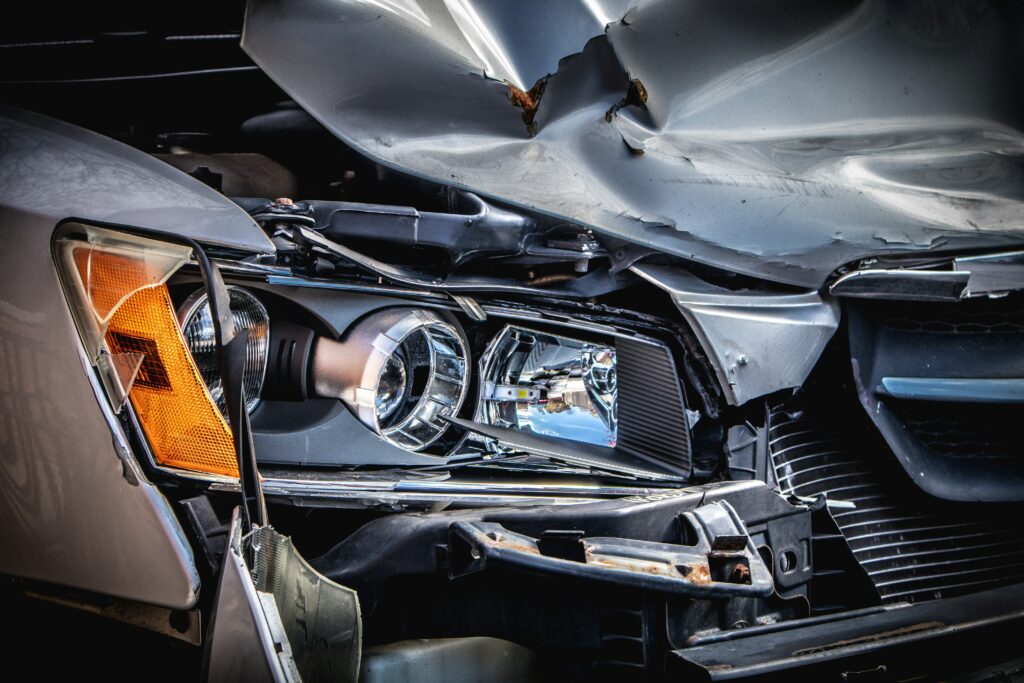
Very few car accidents in Oregon are 100 percent one driver’s fault. One driver was speeding, the other rolled through a stop sign. One was texting, the other changed lanes without signaling. Insurance adjusters know this, and they use it. Oregon’s comparative negligence rule lets them shave a percentage off every dollar you’re owed by arguing that some of the blame belongs to you.
At DuBois Law Group – PDX Injury Law, arguments over fault percentages are where most of our car accident cases are won or lost. This post explains how Oregon’s rule works, where the 51 percent line is, what adjusters do with it, and how to keep your share of fault as low as the facts allow.
What Is Comparative Negligence?
Comparative negligence is the system courts use to divide responsibility for an accident among everyone involved. Instead of asking “whose fault was it?” the jury asks “what percentage of the fault belongs to each person?” Your compensation is then reduced by your percentage.
States handle this three ways. A handful of states still use pure contributory negligence, where being even 1 percent at fault bars recovery entirely. About a dozen use pure comparative negligence, where you can recover something even if you were 90 percent at fault. Oregon, like most states, uses a modified version with a cutoff.
Oregon’s 51 Percent Rule Under ORS 31.600
Oregon’s rule is set out in ORS 31.600. You can recover damages in a negligence claim as long as your fault is not greater than the combined fault of everyone you’re claiming against. In plain terms, you can be up to 50 percent at fault and still recover. At 51 percent, you recover nothing.
A few other parts of the statute matter in practice:
- Your award is reduced by your percentage. If a jury finds your damages are $100,000 and you were 20 percent at fault, you receive $80,000.
- The jury decides the percentages. Under ORS 31.605, the jury (or judge in a bench trial) assigns a percentage to each party, including people who settled before trial and, in some cases, people who were never sued at all.
- Each defendant pays only their share. Oregon abolished joint and several liability for most negligence claims. Under ORS 31.610, a defendant who is 30 percent at fault pays 30 percent of your damages, not the whole amount. If another at-fault driver is uninsured or can’t be found, that gap can land on you.
- Seat belt non-use is capped. ORS 31.760 lets a defendant argue that your failure to wear a seat belt made your injuries worse, but the reduction is limited to 5 percent of your damages.
The 51 percent bar is why fault arguments are so aggressive in Oregon. An adjuster who can push your share from 45 percent to 51 percent doesn’t just reduce the claim. They eliminate it.
How Fault Gets Divided In A Typical Portland Crash
Consider a common scenario. A driver heading east on SE Division makes a left turn across traffic and collides with a westbound driver who was going 10 miles over the limit and glanced at a text a second before impact.
The left-turning driver failed to yield, which is usually the primary cause. But the westbound driver was speeding and distracted, which contributed to the severity and possibly to the crash itself. A jury might assign 70 percent to the left-turner and 30 percent to the westbound driver. If the westbound driver’s damages are $150,000, they recover $105,000. If the split is argued down to 55/45, they recover $82,500. If it tips past 50, they recover nothing.
The same analysis applies to crashes involving more than two parties. In a chain-reaction rear-end collision on I-5 or a crash involving an Uber or Lyft driver and a third vehicle, fault is spread across everyone, and each person’s recovery depends on their own slice.
Comparative Negligence Is Not Just For Drivers
The rule applies to anyone bringing a negligence claim, not just people behind the wheel. Insurers use it against pedestrians and cyclists constantly, and often with less justification.
A person hit in a crosswalk may be accused of crossing against the signal, stepping out from between parked cars, or wearing dark clothing at night. A cyclist may be blamed for riding outside the bike lane or not having a light. Some of these arguments are legitimate. Many are not, and Oregon law gives pedestrians and cyclists specific rights that adjusters tend to overlook. Anyone pursuing a pedestrian accident claim in Portland should expect a comparative fault argument and be ready to answer it with evidence.
How Insurance Adjusters Use Comparative Negligence
Fault percentages aren’t decided by juries in most cases. They’re negotiated with an adjuster, and the adjuster’s opening position is almost always that you share blame. Common tactics include:
- The recorded statement. Adjusters ask open-ended questions hoping you’ll say something like “I didn’t see them” or “I might have been going a little fast.” Those phrases become fault arguments.
- Reading the police report selectively. A citation issued to the other driver is strong evidence in your favor, but the absence of a citation to you doesn’t stop the adjuster from arguing fault anyway.
- Using your own PIP claim against you. Oregon requires every auto policy to include at least $15,000 in Personal Injury Protection, which pays your medical bills regardless of fault. Adjusters sometimes use PIP records and the timing of treatment to argue your injuries were minor or pre-existing.
- Delay. Witnesses forget, skid marks fade, and traffic camera footage gets overwritten. The longer liability stays disputed, the harder it is to push back.

Evidence That Moves Fault Percentages
Because the numbers are argued rather than fixed, the side with better evidence usually wins the percentage fight. The evidence that matters most:
- Photos and video from the scene. Vehicle positions, damage patterns, skid marks, traffic signals, and weather conditions.
- Independent witnesses. A witness with no connection to either driver carries far more weight than either driver’s account.
- Dashcam and nearby camera footage. Many Portland intersections, businesses, and TriMet vehicles have cameras. Footage is typically retained for days, not weeks.
- Phone records. If the other driver was texting, their carrier records can prove it.
- Event data recorder downloads. Most vehicles built in the last decade record speed, braking, and steering inputs for the seconds before a crash.
- Accident reconstruction. In serious cases, an expert can turn physical evidence into a fault analysis a jury can follow.
Gathering this evidence is a large part of what we do in every Portland car accident case we take, and it needs to start immediately after the crash.
Steps To Protect Your Claim
- Call 911 and get a police report. Oregon also requires you to file a DMV Accident and Insurance Report within 72 hours if there is an injury or more than $2,500 in damage.
- Photograph everything before vehicles are moved, if it’s safe to do so.
- Get names and numbers for every witness.
- Do not discuss fault at the scene or apologize. “Are you okay?” is fine. “I’m sorry, I didn’t see you” is not.
- Do not give a recorded statement to the other driver’s insurer before talking to a lawyer.
- See a doctor right away, even if you feel fine. Gaps in treatment are used to argue your injuries came from something else.
- Know the deadline. Under ORS 12.110, you generally have two years from the date of the crash to file a lawsuit. Claims against a city, county, TriMet, or the state require a tort claim notice within 180 days.
Why Choose DuBois Law Group – PDX Injury Law?
The difference between a 30 percent fault assignment and a 50 percent one can be tens of thousands of dollars. The difference between 50 and 51 is everything. At DuBois Law Group – PDX Injury Law, our Portland personal injury attorneys have spent decades arguing fault percentages with Oregon insurers and, when necessary, in front of Multnomah, Washington, and Clackamas County juries.
We handle the evidence collection, deal with the adjusters so you don’t have to, and build the record that keeps your share of fault where it belongs. If you’ve been hurt in a crash and the other side is pointing the finger at you, call DuBois Law Group – PDX Injury Law at (503) 222-4411 for a free consultation. There is no fee unless we recover for you.
 English
 Español de México