 Fewer Cases Better Results






Ride-Share Safety In Portland: What Sami’s Law Actually Does And What To Do After An Uber Or Lyft Accident
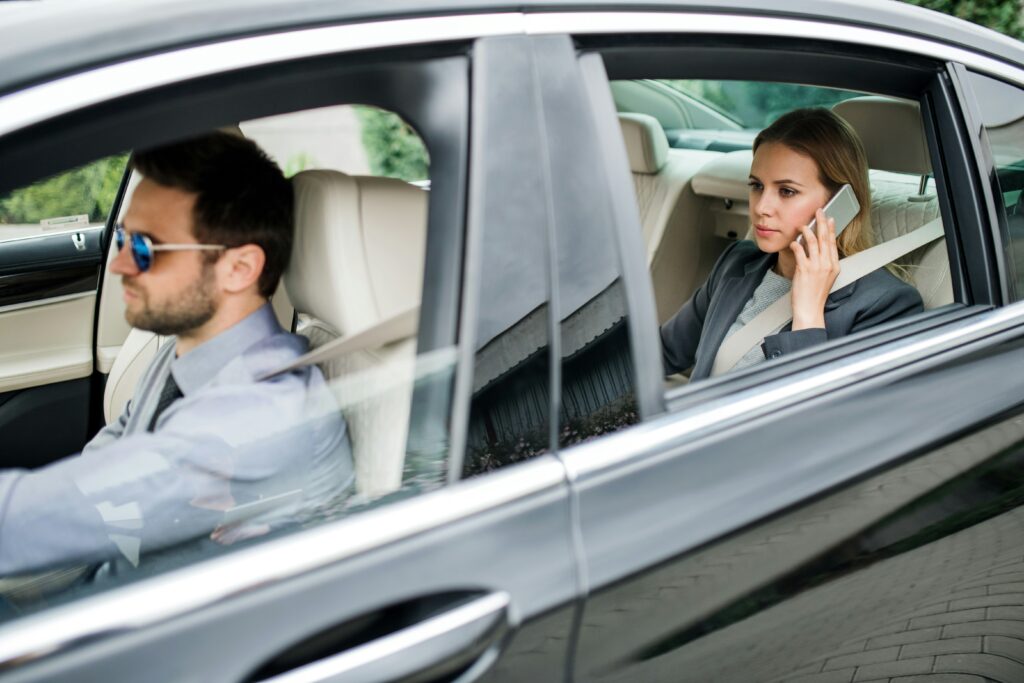
Ride-sharing is part of daily life in Portland. Whether you’re catching a Lyft to PDX, taking an Uber home from dinner in the Pearl District, or splitting a ride after a Timbers match, these services are convenient and usually uneventful. But every ride puts you in a stranger’s car, and when something goes wrong, riders are often surprised by how many gaps exist in the rules that are supposed to protect them.
At DuBois Law Group – PDX Injury Law, we represent people who have been injured or assaulted in ride-share vehicles. This guide walks through the federal law known as Sami’s Law, what it actually does, the local rules that govern Uber and Lyft drivers in Portland, how insurance works when a ride goes wrong, and what to do if you’re hurt.
The Tragedy That Sparked Change: The Death of Samantha Josephson
In March 2019, Samantha Josephson, a 21-year-old University of South Carolina student, got into a car she believed was her Uber after a night out in Columbia. The driver had no connection to any ride-share company. Samantha was found dead the next day. The case drew national attention because it showed how easily someone can pose as a ride-share driver, especially late at night in busy pickup areas where several cars are idling at once.
Her family and lawmakers responded with a federal bill named in her honor. It took several attempts, but a version of Sami’s Law was eventually signed into law.
What Sami’s Law Actually Does
There is a lot of confusion about Sami’s Law, partly because the bill changed significantly between introduction and passage. The version Congress passed in December 2022, which became Public Law 117-330 on January 5, 2023, is narrower than the headlines suggest.
The enacted law directs the Government Accountability Office (GAO) to study assaults involving ride-share and for-hire vehicles and report to Congress. The first report was due within a year of enactment, with follow-up reports every two years. Each report must cover three things:
- Assault data. The number of fatal and non-fatal physical and sexual assaults committed against passengers by drivers or other passengers, and against drivers by passengers, including incidents involving people impersonating ride-share drivers.
- Background check practices. How states and cities screen prospective ride-share and for-hire drivers.
- Company safety measures. What Uber, Lyft, and similar companies have actually put in place to protect riders and drivers.
Earlier versions of the bill went much further. They would have required illuminated signage on every ride-share vehicle, a scannable QR code riders could use to confirm the driver before getting in, and federal penalties for impersonating a driver. Those provisions did not survive to the final law. Some companies have adopted similar features voluntarily, and several states have passed their own signage rules, but there is no federal mandate.
The practical takeaway for Portland riders is that Sami’s Law is a data-gathering law. It does not, on its own, change what an Uber or Lyft driver is required to do when they pick you up.
How Portland Regulates Uber And Lyft Drivers
The stronger protections for riders here come from the City of Portland rather than Washington, D.C. The Portland Bureau of Transportation (PBOT) licenses and regulates transportation network companies (TNCs) operating in the city. Its private-for-hire transportation rules require:
- Criminal and driving-record background checks for every driver
- Annual vehicle inspections
- Visible company trade dress on the vehicle while the driver is logged in
- Commercial insurance, including at least $1 million in liability coverage while a passenger is in the car
- A zero-tolerance policy for drugs and alcohol, with a process for riders to report suspected impairment
These rules matter after a crash or an assault because they set a standard of care. When a driver or company falls short of them, that failure becomes part of the case. Our Portland Uber and Lyft accident attorneys routinely pull driver records, inspection history, and app data to see whether the company followed its own rules and the city’s.
How Insurance Works After A Portland Ride-Share Crash
This is the part most riders never think about until they’re hurt. Coverage in a ride-share crash depends entirely on what the driver was doing in the app at the moment of the collision:
- App off. The driver is a private motorist. Only their personal auto policy applies, and many personal policies exclude commercial driving.
- App on, waiting for a request. Uber and Lyft provide limited contingent liability coverage, typically $50,000 per person and $100,000 per accident for injuries.
- En route to a pickup or carrying a passenger. The company’s $1 million liability policy applies, along with uninsured and underinsured motorist coverage in many cases.
If you were a passenger, you are almost always in the third category, which is good news for coverage. But the insurance carriers for Uber and Lyft are sophisticated, and they routinely dispute which period applied, whether the other driver was at fault, and how serious your injuries are. In most respects, the claim is handled like any other Portland car accident case, with the added complication of a corporate insurer that has handled thousands of these claims before yours.
Riders are also at risk outside the vehicle. Portland’s busiest pickup zones, including the airport, downtown, and the entertainment districts along West Burnside and in Old Town, put people on foot between idling cars and moving traffic. Someone struck while walking to or from a ride-share vehicle has a pedestrian accident claim, and the at-fault driver may be another ride-share driver, a delivery driver, or an ordinary motorist.
The National Push For Stronger Safety Standards
The GAO reporting required by Sami’s Law has kept the pressure on. Lawmakers and consumer advocates continue to push for reforms that go beyond what the federal law requires, including:
- Illuminated signage and rider verification. The signage and QR-code ideas from the original bill are still being proposed at the state level.
- Fingerprint-based background checks. Uber and Lyft use name-based checks. Critics want fingerprinting, which is what most cities require of taxi drivers.
- Dashcams and audio recording. Some jurisdictions have considered requiring in-car recording to protect both riders and drivers in disputes and assault cases.
- Route-deviation alerts. Proposals would require the app to notify a trusted contact when a ride leaves its expected route.
- Driver training on harassment and assault prevention.
What Riders Can Do To Stay Safe
While the rules catch up, a few habits go a long way:
- Match the plate. Compare the license plate in the app with the car that pulls up before you open the door.
- Make the driver say your name. Ask, “Who are you here to pick up?” Never offer your name first.
- Share your trip. Both apps let you send live trip status to a friend or family member.
- Sit in the back. It gives you space and a way out on either side.
- Trust your instincts. If something feels wrong, cancel the ride, step away from the curb, and report the driver in the app.
What To Do If You’re Injured Or Assaulted In A Ride-Share Vehicle
Even with every precaution, crashes and assaults still happen. If you are hurt in an Uber or Lyft in Portland:
- Call 911. Report the incident and get medical care, even if you think your injuries are minor.
- Preserve the app record. Screenshot the trip details, driver name, vehicle, and route before anything changes. Take photos of the scene and your injuries.
- Report it twice. File a report with the ride-share company through the app and with Portland Police.
- Do not give a recorded statement to the company’s insurer until you have spoken with a lawyer.
- Watch the deadline. Under ORS 12.110, most Oregon personal injury claims must be filed within two years of the injury. Claims involving a government entity, such as a crash near a TriMet stop or on airport property, have much shorter notice requirements.
Ride-share companies carry substantial insurance, but their carriers work hard to minimize what they pay. You may be entitled to compensation for medical bills, lost income, pain and suffering, and, in assault cases, emotional distress. Getting the full amount usually requires someone who has done it before.
Why Choose DuBois Law Group – PDX Injury Law?
At DuBois Law Group – PDX Injury Law, we have represented Portland riders injured and assaulted in Uber and Lyft vehicles, as well as pedestrians and other drivers hit by ride-share drivers. Our team of experienced Portland personal injury attorneys understands the specific problems these cases present: identifying which insurance period applied, getting app and GPS data before it disappears, dealing with corporate legal teams, and sorting out third-party liability when more than one driver is involved.
We help clients:
- Determine every available source of coverage
- Preserve evidence from the app, dashcams, and GPS logs
- Use PBOT’s regulations and the company’s own policies to establish negligence
- Hold companies accountable when they fail to protect passengers
If you or someone you love has been hurt in a ride-share incident, don’t try to handle it alone. Contact DuBois Law Group – PDX Injury Law at (503) 222-4411 for a free consultation with a Portland personal injury lawyer. We’ll explain your options, deal with the insurers, and help you move forward.
 English
 Español de México